
You wake up. Your feet touch the floor. And the moment your heel makes contact, a sharp, stabbing pain shoots through the bottom of your foot.If this is your morning, you are not alone. Plantar fasciitis affects millions of people and for most of them, the standard advice is rest, stretch, take an anti-inflammatory, wear better shoes. Repeat for months, sometimes years.But in Ayurveda, this condition was understood and documented long before the word plantar fasciitis existed. It is called Vatakantaka and the classical approach to treating it is as precise, effective, and relevant today as it was three thousand years ago.
What Is Vatakantaka?
The name itself tells you everything.Vata the dosha governing movement, dryness, and the nervous system.Kantaka a thorn.Vatakantaka, literally, is the thorn of Vata. Acharya Sushruta described it in the Sushruta Samhita as a painful condition of the heel (parshni) caused by aggravated Vata lodging in the foot producing sharp, pricking pain that worsens on pressure and with the first steps of the day.Read that again. Worse on pressure. Worse with the first steps of the day.
Modern medicine explains plantar fasciitis as inflammation of the fibrous band of tissue (the plantar fascia) connecting the heel bone to the toes. Ayurveda explains it as Vata vitiation in the Mamsa (muscle tissue) and Snayu (tendons/ligaments) of the foot, resulting in dryness, degeneration, and pain.
Why Painkillers Are Not Enough
Most patients who come to AClinic with Vatakantaka have already tried NSAIDs ibuprofen, diclofenac, or similar. The pain reduces. They walk normally. They stop the medication. Two weeks later, the pain is back.This is because anti-inflammatories suppress the symptom. They do not address the underlying Vata aggravation, the dryness in the local tissues, or the systemic factors poor digestion, disturbed sleep, excessive standing, cold and dry diet that caused the Vata to accumulate there in the first place.
Who Gets Vatakantaka and Why
In clinical practice, Vatakantaka typically presents in:
- People who stand on hard floors for long hours (teachers, surgeons, chefs, retail workers)
- Athletes and runners, especially those who train on concrete
- People over 40 with naturally increasing Vata
- Those with dry skin, constipation, irregular sleep, or high stress all Vata aggravating factors
- Patients who have recently lost significant weight rapidly
The Ayurvedic understanding is important here: Vatakantaka is not just a foot problem. It is a foot expression of a systemic Vata imbalance. Treat only the foot and you get temporary relief. Address the Vata in diet, lifestyle, and local therapy and the condition resolves.
Ayurvedic Treatment for Vatakantaka at AClinic
After a detailed Prakriti assessment and clinical examination, treatment at AClinic for Vatakantaka typically involves a combination of the following:
Abhyanga (Medicated Oil Massage)
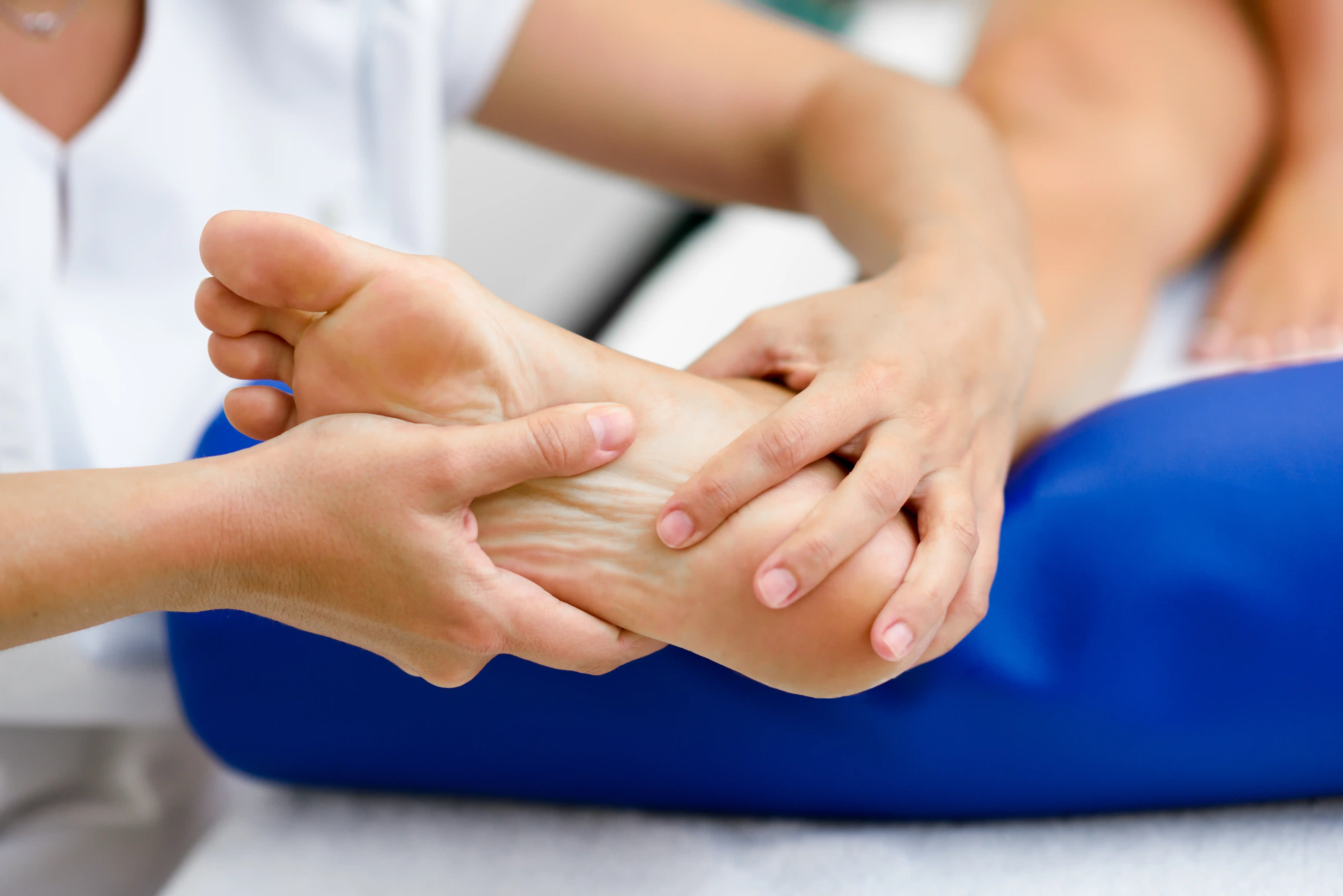
Warm medicated oils commonly Dhanvantaram Taila or Mahanarayan Taila are applied to the foot and heel with specific strokes that work along the Snayu (ligament/tendon pathways). Oil is the primary antidote to Vata it nourishes, lubricates, and reduces the dryness that causes the pain. Local Abhyanga directly to the heel is often prescribed as a daily home practice alongside clinic sessions.
2. Swedana (Herbal Steam)
Following oil application, localised herbal steam therapy relaxes the contracted tissues, improves circulation to the area, and enhances penetration of the medicated oil into deeper layers. This combination of Snehana (oleation) followed by Swedana is a classical Ayurvedic protocol for Vata conditions in the musculoskeletal system.
3. Lepa (Herbal Poultice)
Classical Ayurvedic texts recommend specific herbal pastes applied to the heel to reduce local inflammation and Vata aggravation. Formulations containing Eranda (castor), Rasna, and Devadaru are particularly effective for Vatakantaka.
4. Agnikarma (Thermal Micro-cauterisation)
For chronic, treatment-resistant Vatakantaka, Agnikarma a precise thermal procedure applied to specific Marma points of the foot — is one of the most effective interventions in classical Ayurveda. Sushruta himself recommends Agnikarma for Vatakantaka when other treatments have not resolved the condition. In skilled hands, it produces results that patients often describe as dramatic.
5. Internal Medicines and Diet
Vata-pacifying internal formulations such as Yogaraja Guggulu or Rasnasaptaka Kwatha are prescribed alongside dietary guidance warm, unctuous, nourishing foods; avoidance of cold, dry, and processed foods; and attention to sleep regularity, which is one of the most underestimated Vata regulators.
What Results Look Like
Most patients with early to moderate Vatakantaka experience significant reduction in morning heel pain within 2–3 weeks of consistent Ayurvedic treatment. Chronic cases those with calcification or a heel spur typically require 6–8 weeks of treatment.More importantly, when the treatment also addresses the systemic Vata imbalance through diet, lifestyle, and appropriate internal medicines recurrence is far less common than with purely symptomatic management.
When to Seek Help
If your heel pain has persisted for more than 4–6 weeks, is interfering with your daily activities, or keeps returning after periods of relief, it is time for a proper assessment.
At AClinic, Dr. Ajayita assesses not just the foot but the full clinical picture your Prakriti, your digestive health, your lifestyle, your stress levels before designing a treatment protocol that addresses Vatakantaka at its root.Do not let a thorn of Vata become a permanent part of your morning.
Book a consultation with Dr. Ajayita at AClinic, Chandigarh +91-172-2650793
Online consultations available for patients across India, Canada, UAE, Germany, and Switzerland.